- Home
- Trend
- Weight Loss Strategies
- Acne Tips
- Hair Health Information
- Blemish Removal Tips
- Acne Scar Removal Tips
- Muscle Building Techniques
- Intimate Care Tips
- Postpartum Intimate Care
- Eye Bags Wiki
- Tips for Face Slimming
- Secret of Permanent Hair Removal
- Breast Enlargement Tips
- Cure to Snoring
- Marionette Lines
- Skin-Tightening Secrets

Chinese medicine–based hair loss treatments have become a popular choice among wellness-focused individuals looking to prevent hair thinning or promote regrowth. You’ve probably already read plenty about Western medical approaches, so this time let’s explore something different — how Chinese medicine views the root causes of hair loss and the common hair loss categories it identifies.
Below is a breakdown of the 5 hair loss types in Chinese medicine + improvement methods, along with recommendations for professional TCM herbal treatments. And at the end, you’ll find a powerful solution that helps restore fuller hair volume — don’t miss it!

Understanding the Chinese Medicine Perspective: Hair Loss Is Closely Linked to These Internal Imbalances
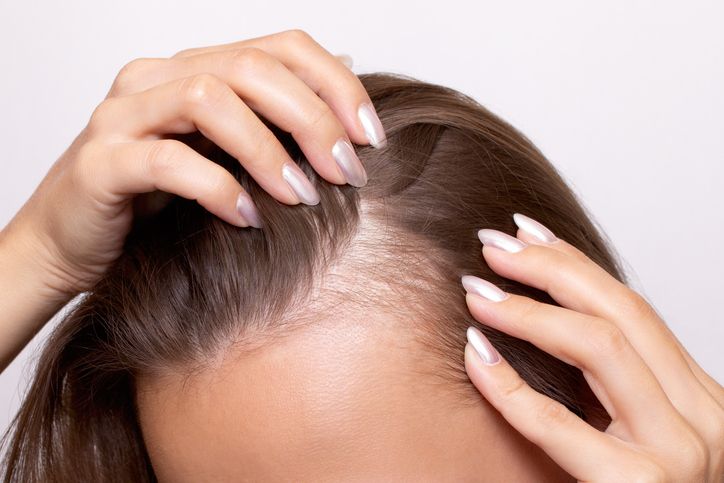
From the viewpoint of Chinese medicine, hair loss isn’t simply a scalp issue — it reflects deeper imbalances within the body. According to TCM theory and classical texts such as Huangdi Neijing, hair growth is closely related to kidney yang, blood, and yin vitality.
Since “hair is the surplus of blood, and the kidneys manifest in the hair,” any deficiency in kidney essence or insufficiency of qi and blood causes the follicles to lose nourishment, resulting in thinning hair or a receding hairline.
Additionally, spleen–stomach damp-heat is another common culprit. Excess damp-heat can lead to excessive scalp oiliness and follicular blockage, further damaging hair follicle health.
Therefore, TCM approaches hair loss holistically — restoring qi and blood, warming kidney yang, and regulating spleen–stomach function to achieve internal–external balance and treat both root and symptoms.
The 5 Common Hair Loss Types in Chinese Medicine — Which One Are You?
1. Qi and Blood Deficiency Hair Loss
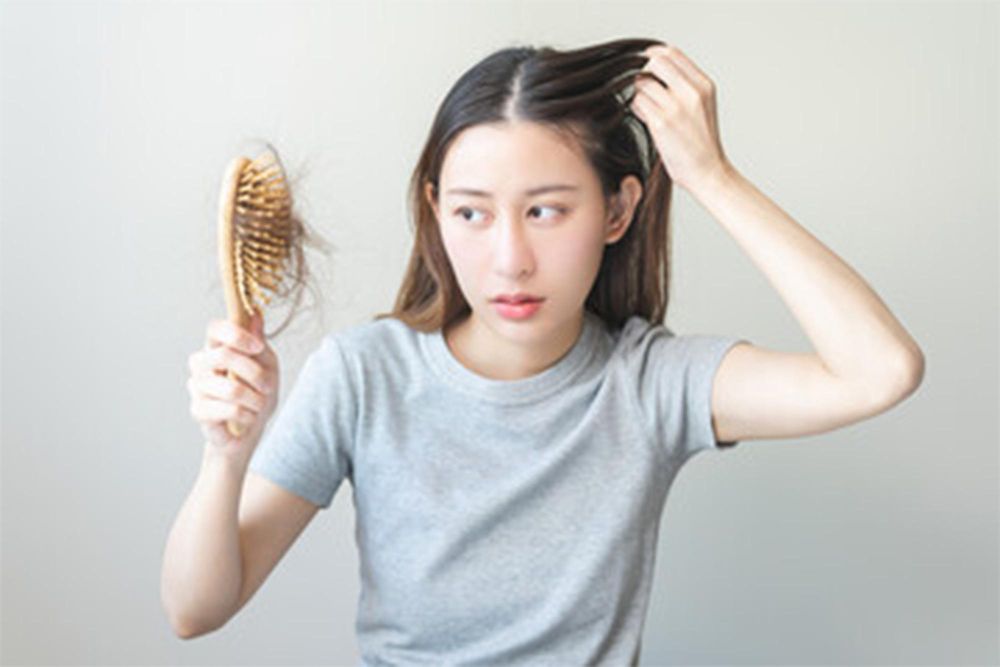
One of the most common types. Qi and blood are the foundation of hair nourishment. If qi is weak, blood production declines; if blood is insufficient, follicles dry out and lose support. This leads to sparse, dry, dull hair that falls easily. Often seen after childbirth, significant blood loss, or long-term weakness.
2. Kidney Deficiency Hair Loss
The kidneys store essence, and “its brilliance shows in the hair.” When kidney essence is low, hair roots weaken. Common in aging individuals, those who overwork, or excessive sexual activity. Symptoms include fewer strands, yellowish or dull hair, plus lower back soreness and fatigue.
3. Liver Stagnation Hair Loss
Emotional stress and mood imbalance cause liver qi stagnation, impeding qi and blood flow. Follicles receive less nourishment and begin shedding. Common in young working adults under chronic stress. Often accompanied by scalp tightness, irritability, and poor sleep.
4. Spleen–Stomach Damp-Heat Hair Loss
Irregular lifestyle, oily diets, or digestive imbalance create internal damp-heat. This rises to the scalp, causing excessive oil production, clogged follicles, dandruff, and itching — leading to hair thinning.
5. Blood-Heat & Dryness Hair Loss
Excess internal heat injures yin and dries the scalp. External pathogens may worsen the condition, causing sudden shedding, round bald patches (alopecia areata), dry mouth, constipation, or a red tongue.
免費體驗
F8 Hair Regrowth Treatment
1 Minute Self-Registration
Date should not be before minimal date
A Holistic Look at Hair Loss Causes: These 5 Factors May Be Responsible for Thinning Hair!
1. Stress & Irregular Lifestyle: The Invisible Hair Loss Trigger
Urban life contributes to chronic stress, emotional tension, and sleep deprivation — all of which disrupt hormones and compromise follicle health. Poor circulation and reduced repair during sleep accelerate shedding. TCM links this to “liver qi stagnation,” where blocked emotions hinder proper blood flow to the scalp.
2. Genetics & Androgens: Unavoidable but Manageable
Genetics play a major role in androgenetic alopecia. Excess DHT shrinks follicles, leading to receding hairlines and reduced density. Although genes can’t be changed, TCM helps slow deterioration through dietary, lifestyle, and scalp-balancing methods.
3. Digestive Function & Nutrient Imbalance
A diet high in sugar, salt, and oil burdens the spleen and stomach, reducing nutrient absorption. Since “the spleen–stomach are the foundation of postnatal energy,” weakened digestive function prevents nutrients from reaching the scalp. Deficiencies in iron, zinc, and B vitamins also accelerate thinning.
4. Kidney Qi Decline & Blood Deficiency
Kidney qi decline reduces nourishment to hair; qi and blood deficiency prevents proper scalp hydration and support. These imbalances often occur with chronic fatigue, postpartum recovery, or long-term illness.
5. Excess Sebum & Scalp Imbalance
Too much scalp oil leads to clogged follicles and inflammation, often associated with a damp-heat constitution. Hong Kong’s humid climate and heavy, oily diets worsen this. Scalp redness, itching, and oiliness are signs of this imbalance.
The 4 Key Chinese Medicine Hair Loss Treatments: Strengthen Hair From Inside and Out
1. Acupuncture: Unblocking Meridians & Revitalising Follicles
By stimulating points like Baihui, Fengchi, Touwei, and Ashi points, acupuncture improves scalp circulation and activates dormant follicles. It also reduces stress and regulates the nervous system.
2. Plum Blossom Needle Therapy: Gentle Stimulation for Scalp Activation
This tapping method is effective for oily scalp types and early-stage thinning. It enhances local blood flow and can be paired with herbal liquids to increase follicle absorption.
3. Professional Herbal Medicine: Nourishing Qi, Blood & Kidney Essence
For long-term thinning or weak constitutions, personalised herbal prescriptions are essential. Examples include
• Bai Shao — nourishes blood and liver
• Cuscuta seeds (Tu Si Zi) — strengthens kidney essence and roots
Tailored formulas help restore long-term hair growth and improve hair quality.
4. Herbal Diet & Daily Adjustments
Supplementing with nutrient-rich “black foods” (black sesame, black beans, wood ear mushrooms) supports kidney health and hair nourishment in TCM.
Beyond Treatments: 3 Daily Tips to Help Prevent Hair Loss
1. Improve Sleep Routine
Early, regular sleep supports metabolism, hormonal balance, and scalp repair. Aim to sleep before 11 pm.
2. Stress Management
Yoga, meditation, breathing exercises, or regular workouts (3× weekly, 30 minutes each) help stabilise emotions and reduce stress-related shedding.
3. Scalp Care: Gentle, Nourishing, Consistent
• Gentle cleansing: Choose silicone-free, mild shampoos
• Scalp massage: Use fingertips to boost circulation during washing
• Avoid hot air: Air-dry when possible, or use low heat
免費體驗
F8 Hair Regrowth Treatment
1 Minute Self-Registration
Date should not be before minimal date
TCM Taking Too Long to Show Results? Try the Perfect Medical F8 Hair Regrowth Treatment!
Does hair loss improvement always rely on Chinese medicine? Not necessarily! The Perfect Medical F8 Hair Regrowth Treatment offers a modern, non-invasive alternative with clinically effective technology — no acupuncture, no herbal ingestion, just lie back and relax.
The F8 treatment uses low-energy, medical-grade soft laser technology that’s gentle enough for sensitive scalps. It helps rebalance scalp oil and moisture, stabilise the scalp environment, and stimulate dormant follicles to regrow stronger, healthier hair.
Ideal for diffuse thinning, receding hairlines, telogen effluvium, oily scalp hair loss, postpartum shedding, and stress-related hair thinning.
Register Today: Perfect Medical F8 Hair Regrowth Treatment免費體驗
F8 Hair Regrowth Treatment
1 Minute Self-Registration
Date should not be before minimal date
FAQ

1. How long does TCM hair loss treatment take to show results?
Typically 3–6 months due to its gradual, holistic nature.
2. Are there side effects from TCM herbal medicine?
Generally mild, but prescriptions must be professionally tailored to avoid imbalance.
3. Can I combine TCM with Western treatments?
Yes, but always inform your doctor to avoid interactions.
4. How do I know which TCM hair loss type I belong to?
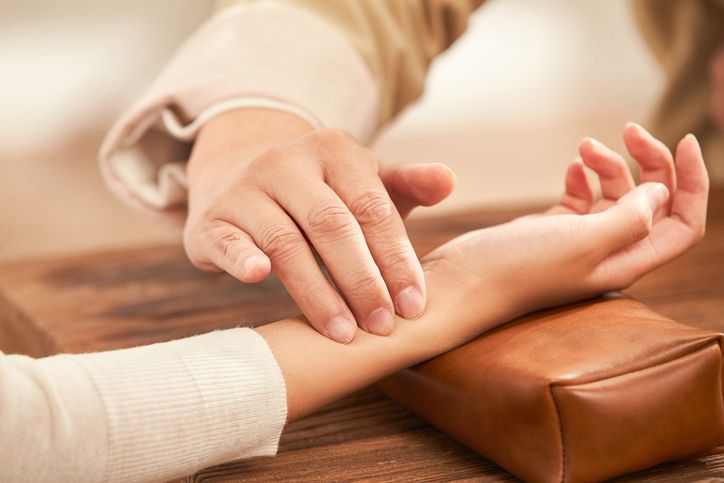
A professional TCM consultation using the four diagnostic methods is recommended.
5. Anything to avoid in the diet?
Minimise spicy, fried, and sugary foods; eat more protein, vitamins, and minerals.