- Home
- Trend
- Weight Loss Strategies
- Acne Tips
- Hair Health Information
- Blemish Removal Tips
- Acne Scar Removal Tips
- Muscle Building Techniques
- Intimate Care Tips
- Postpartum Intimate Care
- Eye Bags Wiki
- Tips for Face Slimming
- Secret of Permanent Hair Removal
- Breast Enlargement Tips
- Cure to Snoring
- Marionette Lines
- Skin-Tightening Secrets

Cheeks, often called "apple cheeks," are a symbol of youthful charm. With plump, defined apple cheeks, even women over 30 can exude a sweet, lively, and youthful vibe. On the other hand, if the cheeks sag or flatten, even with makeup and blush, the face may look harsh, distant, or unapproachable, adding visual years—making sagging cheeks a clear sign of aging.
Look at celebrities like Song Hye-kyo, Jang Nara, Lin Chi-ling, or Gao Yuanyuan—they not only have flawlessly maintained, radiant skin but also naturally lifted, “always-on” apple cheeks! Clearly, full, youthful cheeks are a key factor in maintaining an age-defying look. Below, we explore apple cheeks in detail: their causes, how to maintain them, and a breakdown of cosmetic options for cheek enhancement.

Are Apple Cheeks a “Lucky Feature”? What Are They Exactly?

Definition of Apple Cheeks
Most women know that apple cheeks reduce the appearance of age, but many don’t realize they are different from high cheekbones. Apple cheeks are located about 2 cm below the eyes in the subcutaneous tissue and fat, forming an inverted triangle shape. When we smile, facial muscles and ligaments lift and compress this fat, creating a plump, rounded look—like a shiny apple—hence the nickname.
High cheekbones, on the other hand, are bone structures. Their appearance does not change with facial expressions, and unlike apple cheeks, they do not sag visibly with age.
The Significance of Apple Cheeks
Apple cheeks are one of the key indicators of visual age. Their position and fullness can make a face look youthful or older than it actually is. When apple cheeks lose volume, the mid-face flattens, leading to nasolabial folds. Combined with eye wrinkles and forehead lines, the face can appear a decade older. From a physiognomy perspective, sagging, flat cheeks give a gaunt, aged, or harsh appearance—often referred to as a “bitter gourd face.” Maintaining plump cheeks is essential for a youthful, cheerful, and lucky appearance.
Causes of Sagging Apple Cheeks
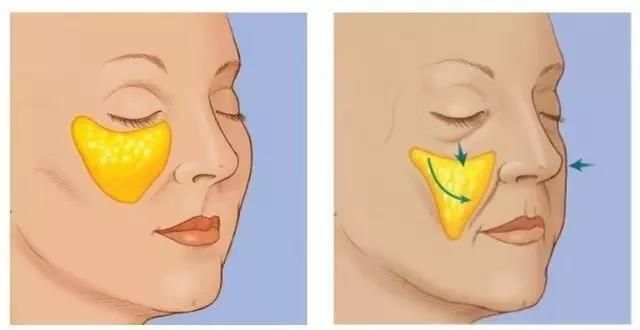
Why do apple cheeks sag? Sagging can result from congenital (genetic) factors or lifestyle and age-related factors.
1. Genetic Factors
Some people are naturally predisposed to sagging cheeks due to weaker facial bone structure, flat cheekbones, protruding upper jaws, or prominent tear troughs and nasolabial folds. This lack of structural support makes the cheeks appear flatter and less noticeable.
2. Natural Aging
The main reason for sagging cheeks is aging. After 25, collagen and facial fat loss accelerate. If collagen production cannot keep up with this loss, the skin loses support, becomes saggy, and gravity gradually pulls the face downward, affecting the apple cheeks and forming nasolabial folds. Teen years often feature the plumpest, most defined cheeks.
3. Overuse of Eyes
Modern lifestyles—constantly using smartphones or computers—strain the eyes, reducing blood circulation around the eyes. This accelerates aging and sagging of the skin around the eyes and cheeks.
免費體驗
Thermage FLX 5th Generation Face Lift Treatment
1 Minute Self-Registration
Date should not be before minimal date
How to Lift Apple Cheeks at Home: Lifestyle Tips
Even a 1 cm drop in apple cheeks can make a face look 10 years older, accompanied by nasolabial folds, tear troughs, eye wrinkles, and double chin. Here are six ways to maintain or lift apple cheeks at home:
1. Lifting Massage
Cheeks are prone to sagging, so regular lifting massages help. When applying cream, massage upward rather than downward. Use your knuckles along the lower edge of the cheekbones or fingertips to massage from the inner to outer cheeks in five circular motions, holding each for five seconds. Daily practice can help prevent sagging.
2. Smile Training
Habitually keeping your mouth open or not exercising facial muscles can reduce cheek tension, leading to sagging. Smile exercises—like showing eight teeth or more while saying “E,” then narrowing lips and saying “Wu”—train facial muscles and keep apple cheeks firm. Repeat five times daily.
3. Acupressure Massage
Facial acupoints, like the Zuanliao point under the cheekbone, help counteract gravity. Apply pressure with the index and middle fingers and lift toward the temple. This improves apple cheek fullness and slows aging while also promoting heart health.
4. Sun Protection
Sagging is linked to collagen loss. UVA and UVB rays accelerate skin aging and darkening. Apply SPF30+ daily and reapply as needed. Choose moisturizing physical sunscreens for dry or sensitive skin and lighter formulas for oily or acne-prone skin.
5. Collagen Intake
Eat collagen-rich foods: pork trotters, pork skin, chicken feet, chicken wings, fish head, fish maw, cartilage, etc. They are rich in collagen and taste great. Avoid excessive intake due to high calories and fat.
6. Vitamin A and C Skincare
Choose products with vitamins A or C. Vitamin A (retinol) stimulates collagen and new skin cell production, improving elasticity and reducing dullness, spots, and wrinkles. Vitamin C promotes collagen formation, neutralizes free radicals, protects from UV damage, and brightens the skin.
Cosmetic Treatments to Enhance Apple Cheeks
If sagging is noticeable, home methods may not suffice. Treatments include invasive and non-invasive options: fillers, fat grafting, surgical facelifts, radiofrequency, and ultrasound treatments.
1. Hyaluronic Acid Injections
Injecting HA adds volume and improves hydration. Effects are immediate but temporary. Risks include migration, unevenness, and an unnatural look if overdone.
2. Autologous Fat Grafting
Fat is harvested from areas like the abdomen or thighs, processed, and injected into sunken cheeks. Results are longer-lasting and more natural but come with surgical risks like bruising, irregularities, or fat necrosis.
3. Surgical Facelift
Facelifts remove excess skin and tighten sagging tissues. While effective, surgery is invasive, risky, and requires long recovery.
4. Radiofrequency and Ultrasound Lifting
Non-invasive treatments like Thermage (RF) or Ultherapy (HIFU) stimulate collagen production to lift and tighten the cheeks. RF heats dermis and fascia gradually, improving skin texture. Ultrasound targets the fascia layer to lift sagging cheeks. Both work by boosting collagen and can be chosen based on skin needs and budget.
Natural Cheek Lifting Without Injections: Thermage FLX 5th Gen
Studies show that a 1 cm drop in apple cheeks can make you look 8–10 years older. I personally have naturally flat cheeks, which became more noticeable with age.
After researching options, I opted for Thermage FLX 5th Generation Face Lift Treatment:
• Uses RF energy to penetrate 4.3 mm into the skin
• Stimulates collagen to tighten skin and lift apple cheeks
• Non-invasive, no downtime—back to work immediately
• Comfortable treatment with adjustable energy
• Immediate V-line contour improvement, fuller-looking cheeks over days as collagen production continues
For the discounted trial price, I saw noticeable results and decided to purchase the full course to maintain youthful cheeks. Perfect for anyone wanting visible results without surgery!
免費體驗
Thermage FLX 5th Generation Face Lift Treatment
1 Minute Self-Registration
Date should not be before minimal date
FAQ

How to distinguish apple cheeks from high cheekbones?
Apple cheeks: ~2 cm below the eyes, inverted triangle fat pad, visible when smiling. High cheekbones: bone structure, unchanged whether smiling or not.
Why do apple cheeks sag?
Genetic structure, aging (fat and collagen loss), gravity, excessive screen use, late nights, and insufficient sun protection.
Can hyaluronic acid make apple cheeks fuller?
Yes, but results are temporary, require repeat injections, and can look unnatural if overdone.
Who benefits from cosmetic treatments for apple cheeks?
Anyone noticing their once-plump cheeks sagging or losing volume, with associated nasolabial folds, wrinkles, or double chin.