- Home
- Trend
- Weight Loss Strategies
- Acne Tips
- Hair Health Information
- Blemish Removal Tips
- Acne Scar Removal Tips
- Muscle Building Techniques
- Intimate Care Tips
- Postpartum Intimate Care
- Eye Bags Wiki
- Tips for Face Slimming
- Secret of Permanent Hair Removal
- Breast Enlargement Tips
- Cure to Snoring
- Marionette Lines
- Skin-Tightening Secrets

Does eating pig’s trotters or fish maw effectively supplement collagen? Nutritionists say the impact of eating such high-collagen foods is extremely low—it may only make you gain weight! To prevent collagen loss, combine 5 natural foods with 1 essential strategy.

What Is Collagen?

Collagen-rich foods and natural high-protein foods are highly sought after by beauty enthusiasts. But why do we need to supplement collagen (Collagen) in the first place? Before comparing which collagen-rich foods are the best and most effective, it’s important to understand collagen’s role and determine whether you really need supplementation. Otherwise, you might inadvertently consume high-fat or high-sugar foods!
Collagen Benefits—“Rebar” in Skin, “Cement” in Bones
Collagen is the most abundant fibrous protein in the human body, accounting for 30% of the total protein in the body (collagen/bone collagen makes up 30% of the 16% of total protein).
According to nutritionists, tendons are composed of 80% collagen, 1/3 of bones and 100% of cartilage tissue are made of collagen! In skin, collagen acts like “rebar” in concrete, supporting the skin and maintaining elasticity. It helps keep your cheeks lifted and prevents premature sagging or puffiness.
Does Eating Collagen-Rich Foods Really Work?
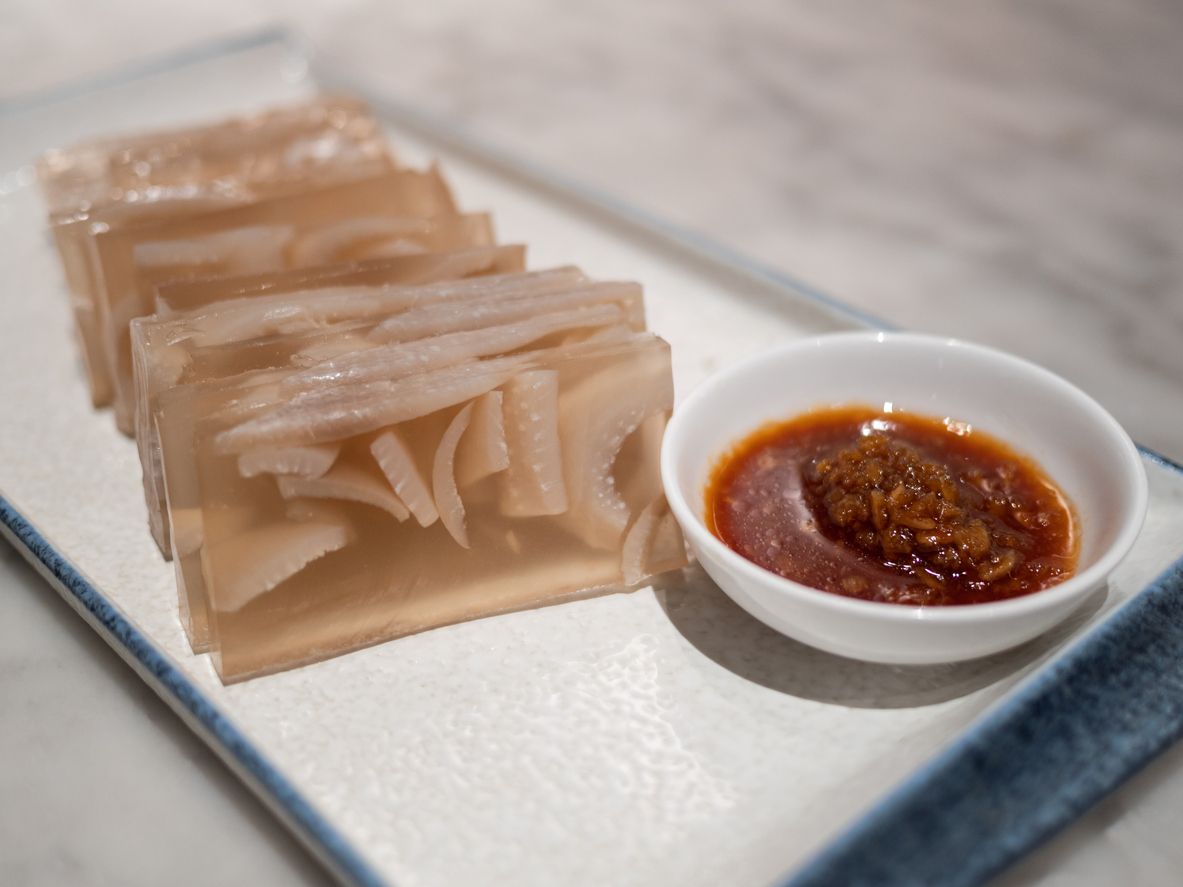
Nutritionists note that while eating collagen-rich foods is theoretically the simplest, most natural way to supplement bone collagen, its effectiveness is questionable. Collagen from food is broken down in the digestive system into small amino acids, which are absorbed by the body and then used as raw materials for collagen synthesis.
However, consuming high-collagen foods or collagen supplements does not necessarily increase collagen in the skin. Nutrients from food are distributed throughout the body, so even if some collagen reaches the facial skin, the effect is often minimal. Consuming large amounts of high-collagen foods can also increase fat, weight, and blood lipid levels.
Can Pig’s Trotters or Fish Maw Supplement Bone Collagen?
Collagen in meat or fish serves as a raw material for the body’s collagen production.
Foods like pig’s trotters, pig skin, or fish maw are famous for their beauty benefits. But what you’re actually consuming is mostly fat. For example, 50g of pig skin contains 81.7% fat and only 18.3% protein, with nearly 500 calories per 100g.
Most so-called high-collagen foods are also high-fat, high-calorie foods. So before getting protein, you mainly get fat.
Even though pig’s trotters and pig skin are high in protein, collagen molecules in food are very large, and the digestive system can’t fully break them down into absorbable small molecules. So most of what you eat turns into energy rather than usable collagen.
Can Wood Ear or Snow Fungus Help Collagen Without Weight Gain?
Many people assume that the principle of high-collagen foods is “like supports like”—slippery, translucent foods are full of collagen. That’s only partially correct.
Collagen is a type of protein found mainly in animals and marine life. The slippery texture in foods like wood ear or snow fungus comes from water-soluble fiber, not collagen.
免費體驗
Thermage FLX 5th Generation Face Lift Treatment
1 Minute Self-Registration
Date should not be before minimal date
High-Collagen Foods That Help the Body Produce Collagen
Eating collagen-rich connective tissue directly is unreliable, but you can eat foods that support the body’s own collagen production:
1. Bone Broth
The protein in bone broth is bioactive and easily absorbed by the digestive system. Chicken broth contains type II collagen, which lubricates and supports joints; beef broth contains type I collagen, which promotes skin health.
2. Leafy Green Vegetables
Chlorophyll in leafy greens provides antioxidant protection, preventing premature collagen aging. Vegetables like spinach and kale are rich in vitamin C, an essential cofactor for collagen synthesis.
3. Deep-Sea Fish
High-protein foods like chicken or fish help the body produce collagen. Deep-sea fish such as salmon or tuna contain Omega-3 fatty acids, zinc, and other trace minerals that reduce inflammation, protect skin, and slow collagen loss. Eating high-protein foods twice a week helps maintain youthful, healthy skin.
4. Antioxidant Fruits and Vegetables
Citrus fruits, berries, tomatoes, and avocado contain antioxidants like vitamins C and E, lycopene, and tannins, which protect collagen from sun damage and stimulate its production. Among these, vitamin C is crucial—it’s the essential “coenzyme” for collagen synthesis. Without sufficient vitamin C, your body can’t produce collagen efficiently.
5. Eggs
Eggs contain complete nutrients, trace minerals, and high amounts of proline, a key amino acid in collagen synthesis. Instead of relying on direct animal connective tissue, eggs support your body’s natural collagen production.
Are Collagen Powders and Drinks Worth It?
Opinions vary. Some say collagen powders are like paying an “IQ tax” because the protein breaks down into small components during digestion, and it’s unclear whether it reaches the skin.
However, studies in mice showed hydrolyzed collagen was incorporated into skin and cartilage within 30 minutes and stayed in the skin for up to 14 days. Clinical studies on women taking porcine collagen powders for 2 months showed improvements in skin hydration and density.
Key for Effective Collagen Supplements:
1. Molecular weight between 1,000–2,500 Dalton
2. Daily intake of at least 5,000mg
3. Small peptides (di- and tri-peptides)
4. Combined with vitamin C
For best results, collagen powders or drinks should be taken when the stomach is relatively empty, such as on an empty stomach or before bedtime. Effects usually require at least 2 months of consistent intake. Be cautious of very rapid effects—they may indicate added hormones.
Why Does Collagen Deplete?
Even if you do nothing, collagen naturally declines with age. After 25, collagen decreases by about 6% per year. When collagen loss exceeds replenishment, the skin shows dryness, sensitivity, wrinkles, and sagging. Poor lifestyle habits—drinking, smoking, eating fried or sugary foods, inadequate moisturizing, and sun protection—accelerate collagen loss.
免費體驗
Thermage FLX 5th Generation Face Lift Treatment
1 Minute Self-Registration
Date should not be before minimal date
4 Ways to Supplement Collagen
1. Eat Collagen-Rich Foods: Select effective foods, powders, or drinks and maintain consistent intake. Effects vary and may not be visible. Avoid high-fat foods.
2. Topical Collagen Products: Most collagen creams have molecules too large to penetrate the skin; they mainly moisturize rather than truly supplement collagen.
3. Collagen-Boosting Injections: Products like poly-L-lactic acid, hyaluronic acid, glycolic acid, PCL, or CMC gels stimulate fibroblasts to increase collagen metabolism. Effectiveness varies by person, injection depth, and technique.
4. Medical Aesthetic Treatments: Laser, IPL, radiofrequency, and ultrasound stimulate collagen via controlled heat, improving elasticity, moisture, and contour. Results typically peak 2–3 weeks post-treatment and are more controllable and efficient than dietary supplementation.
6 Habits to Reduce Collagen Loss
1. Avoid frying high-collagen foods like pig’s trotters—boil or stew instead.
2. Don’t smoke or drink alcohol.
3. Eat 3 types of vegetables/fruits daily and drink 1–2 cups of antioxidant-rich tea.
4. Regular aesthetic treatments can provide targeted collagen stimulation.
Editor’s Test: Thermage FLX 5th-Generation Treatment
I used to believe in “like supports like,” eating high-collagen foods while exercising. My trainer warned that collagen in food is hard to digest, and high calories may make you gain weight before you even see anti-aging effects.
Friends reported excellent results with Perfect Medical’s Thermage FLX 5th Generation Face Lift Treatment. Using medical-grade monopolar RF technology, it non-invasively lifts sagging cheeks and jawline while stimulating dermal collagen growth. The treatment reduces wrinkles, tightens the skin, lifts sagging cheeks, improves elasticity and hydration, and reshapes facial contours—visible anti-aging results!
Perfect Medical now offers trial experiences with upgraded 4.0 probes for full-face coverage, energy adjustment, vibration, and cooling for maximum comfort. After one session, I noticed immediate lifting and plumping of my cheeks, smoother wrinkles, and a visibly younger appearance.
免費體驗
Thermage FLX 5th Generation Face Lift Treatment
1 Minute Self-Registration
Date should not be before minimal date
FAQ

Can collagen from meat improve skin?
Not really. Collagen molecules in foods like pig’s trotters, pig skin, and fish maw are too large to be absorbed efficiently by the gut. Overeating for collagen may increase weight.
How to prevent collagen loss?
Maintain healthy lifestyle habits, a balanced diet, and sun protection. Daily consumption of vegetables, fruits, green tea, and sufficient vitamin C helps support collagen synthesis.
What are the differences between meat and fish collagen?
Fish collagen is often marketed as closer to human collagen and pollution-free, but molecular size and processing are more important than the source for absorption.
Is there any effective collagen products?
Products must have small enough hydrolyzed collagen molecules and added vitamin C. Absorption and results vary by individual.
How to directly increase facial collagen?
Regular medical aesthetic treatments like Thermage FLX 5th Generation Face Lift Treatment stimulate collagen non-invasively, increasing skin thickness, elasticity, and hydration while reducing wrinkles and sagging, giving visible anti-aging results.