- Home
- Trend
- Weight Loss Strategies
- Acne Tips
- Hair Health Information
- Blemish Removal Tips
- Acne Scar Removal Tips
- Muscle Building Techniques
- Intimate Care Tips
- Postpartum Intimate Care
- Eye Bags Wiki
- Tips for Face Slimming
- Secret of Permanent Hair Removal
- Breast Enlargement Tips
- Cure to Snoring
- Marionette Lines
- Skin-Tightening Secrets

Rosacea, also called “rosy nose” or “rhinophyma”, is characterized by reddening and visible tiny blood vessels in the central area of the face. While it’s commonly seen in people with sensitive skin, any skin type can be affected.
The causes of rosacea are diverse—from immune system imbalances to external environmental triggers—making it a chronic skin condition that’s difficult to fully eradicate.
So, how should rosacea be treated? How does it differ from acne? Rosacea is not a hopeless condition! Let’s explore the 4 main types of rosacea, its causes, and professional treatment methods—stay until the end for the full guide.

Understanding Rosacea: When Facial Redness Is a Cry for Help

Rosacea is a chronic skin condition affecting the central face—cheeks, nose, forehead, and chin. Its development is linked to:
• Skin barrier damage
• Dilated capillaries
• Immune system imbalance
Triggers such as heat, UV exposure, stress, alcohol, or spicy food can repeatedly dilate blood vessels, causing chronic inflammation. Over time, this results in redness, bumps, and pustules. Women are more prone due to hormonal fluctuations and higher skin sensitivity.
Key differences from acne:
• Rosacea is not caused by clogged pores or excess sebum
• Acne typically has blackheads and oily skin, while rosacea is mainly red, swollen, hot, and sometimes painful, often with burning or itching
• Untreated rosacea may become persistent and difficult to fully resolve
Common symptoms:
• Persistent redness: Central face (cheeks, nose, chin) remains red
• Visible capillaries: Fine red blood vessels on the skin
• Red bumps and pustules: Resemble acne but without blackheads
• Skin sensitivity & burning: Even regular skincare may sting or itch
• Eye discomfort: Dryness, redness, or foreign body sensation
4 Common Types of Rosacea: Identify Your Skin for Targeted Care
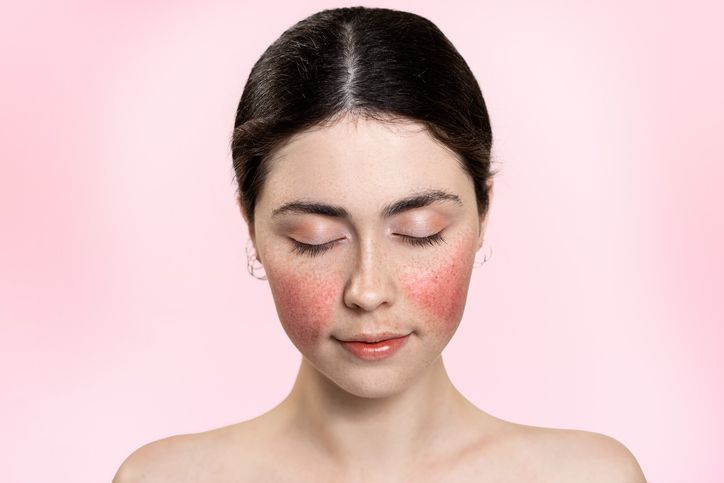
1. Erythematotelangiectatic Rosacea (Redness & Visible Vessels)
• Most common type: Persistent facial redness with visible capillaries
• Areas affected: Cheeks, nose, chin, forehead
• Symptoms: Red, hot, tight skin; worsens with temperature changes or emotional stress
• At-risk: Sun-exposed or high-temperature environments, naturally thin skin
2. Papulopustular Rosacea (Bumps & Pustules)
• Often mistaken for acne but caused differently
• Symptoms: Red bumps and pustules without blackheads, localized swelling and heat, sometimes mild pain
• Untreated: Can recur and leave stubborn red marks
3. Rhinophyma (Thickened Nose)
• Mostly in men; severe, chronic form
• Symptoms: Nose skin thickens, enlarged pores, prominent “bulbous nose”
• Often due to untreated or recurring rosacea
4. Ocular Rosacea
• Primarily affects the eyes, not facial skin
• Symptoms: Red, swollen eyelids, redness in the whites of the eyes, dryness, burning, foreign body sensation
• Untreated: May damage cornea or cause blurred vision
• Sometimes occurs alone or alongside facial rosacea
免費體驗
Acne Treatment
1 Minute Self-Registration
Date should not be before minimal date
Why Does Rosacea Occur? 5 Major Causes Behind Facial Flare-Ups
1. Skin Barrier Damage & Abnormal Immune Response
• Damaged skin barrier allows external stimuli to penetrate, triggering overactive immune reactions
• Leads to capillary dilation, redness, inflammation, and heightened sensitivity
2. Environmental & Temperature Triggers
• Extreme weather, sun exposure, cold winds, or rapid temperature changes can dilate facial capillaries and worsen redness
3. Diet & Beverages
• Spicy foods and alcohol trigger blood vessel dilation, increasing facial heat and redness
• Caffeine (strong tea, coffee) may also trigger symptoms in some
• Recommendation: eat anti-inflammatory foods and a light diet to stabilize skin
4. Stress & Hormonal Fluctuations
• Stress, anxiety, or tension can affect the autonomic nervous system, causing facial redness or burning
• Women are more prone during menstruation, pregnancy, or menopause
5. Demodex Mites & Skin Microbiome Imbalance
• Studies show higher Demodex mite density in rosacea patients
• These mites in hair follicles and sebaceous glands trigger inflammation
• If the immune system cannot control them, redness, bumps, and pustules worsen
4 Professional Treatment Approaches: Targeted Care for Rosacea
1. Dermatologist Diagnosis & Topical Medications
• Seek professional diagnosis first
• Topical treatments: Metronidazole, azelaic acid, ivermectin—reduce Demodex mites and inflammation
• Avoid steroid overuse: Short-term relief but long-term use worsens redness and thins skin
• Topical retinoids: Low-concentration retinoids can improve bumps and skin turnover under medical guidance
2. Oral Medications & Advanced Therapies
• Severe or recurring cases may require:
• Oral isotretinoin: Reduces sebum and inflammation for treatment-resistant cases
• Oral antibiotics (doxycycline): Reduce inflammation, bumps, and pustules
3. Laser & Light-Based Treatments
• Treat persistent redness and visible vessels effectively
• Vascular lasers: Target dilated vessels to coagulate and naturally absorb, improving redness
• IPL / Laser resurfacing: Reduces redness, evens skin tone, promotes collagen for healthy glow
• Must be performed by experienced professionals and usually requires multiple sessions
4. Traditional Chinese Medicine & Lifestyle Approaches
• Rosacea linked to internal imbalances: “lung heat, blood heat, damp-heat”
• Herbal remedies: Houttuynia, Coptis, honeysuckle for detox and inflammation reduction
• Acupuncture & cupping: Promote circulation, stabilize immunity
• Diet: Avoid spicy foods & alcohol; eat hydrating, light vegetables and fruits
Other tips for maintaining results:
• Gentle cleansing; avoid hot water and harsh scrubs
• Daily sunscreen for sensitive skin
• Avoid irritating ingredients or frequent exfoliation
• Stay relaxed to reduce stress and sudden temperature changes
Ultimate Rosacea Treatment: Perfect Medical Acne Treatment
Rosacea requires long-term management. For rapid, effective care, consider Perfect Medical’s Acne Treatment:
• Non-invasive, painless, 0 side effects
• Treats central face, nose, chin, and other areas
• Clears rosacea, acne, blackheads, and clogged pores
• Improves skin texture, moisture balance, and even tone
Technology used: High-tech dual-spiral suction + vacuum microdermabrasion for deep cleansing and pore care, restoring oil-water balance. Also effective for pockmarks, rough pores, dry skin, and dull complexion. Book now for a professional skin analysis + Perfect Medical Acne Treatment!
免費體驗
Acne Treatment
1 Minute Self-Registration
Date should not be before minimal date
FAQ

1. Is rosacea contagious?
No.
2. Can rosacea be completely cured?
Not yet, but it can be effectively controlled.
3. What are the foods to avoid?
Spicy foods, alcohol, dairy products.
4. Does stress affect rosacea?
Yes, stress is a common trigger.
5. Can men get rosacea?
Yes, though more common in women.